Premier League Clubs Expand Ties to Unlicensed Gambling Partners as Policy Review Advances
Drew Flores · Sep 11, 2026

Premier League Clubs Expand Ties to Unlicensed Gambling Partners as Policy Review Advances
Ten of the Premier League’s twenty clubs now maintain sponsorship or advertising arrangements with gambling companies that lack UK licences, a figure that rose from six clubs earlier in the summer of 2026. The increase brings exactly half the league into relationships that fall outside the regulated market, and it occurs while the government considers restrictions on such deals following an eight-week consultation period that ended during the first week of September 2026.
Consultation Closure and Policy Timeline
The consultation examined potential prohibitions on sponsorships involving unlicensed operators, and its conclusion leaves the Department for Culture, Media and Sport with evidence gathered from industry participants, regulatory bodies, and public submissions. Officials have not yet announced next steps, yet the timing places any resulting legislation in the same window as the Premier League’s self-imposed restriction on front-of-shirt gambling logos for the 2026-27 season.
Shift in Club Revenue Streams
Club finance teams have responded to the voluntary front-of-shirt rule by moving existing partnerships to secondary placements such as sleeve logos, training-ground branding, and digital advertising inventory. Data collected by league monitoring services shows that six additional clubs completed new agreements with unlicensed operators between June and early September 2026, bringing the total to ten. These arrangements generate revenue that clubs have previously cited as material to annual budgets, particularly for mid-table sides whose match-day and broadcast income remains lower than that of the traditional top six.
Market Context and Unregulated Operators
Britain’s Gambling Commission maintains a register of licensed operators that must comply with advertising standards, player-protection rules, and tax obligations. Companies outside that register operate without those constraints, and their sponsorship activity now reaches half the Premier League. Figures released by the commission earlier in 2026 indicated that unlicensed operators captured an estimated share of domestic betting turnover, though the precise portion linked to football sponsorship remains subject to ongoing analysis by researchers tracking advertising placements.
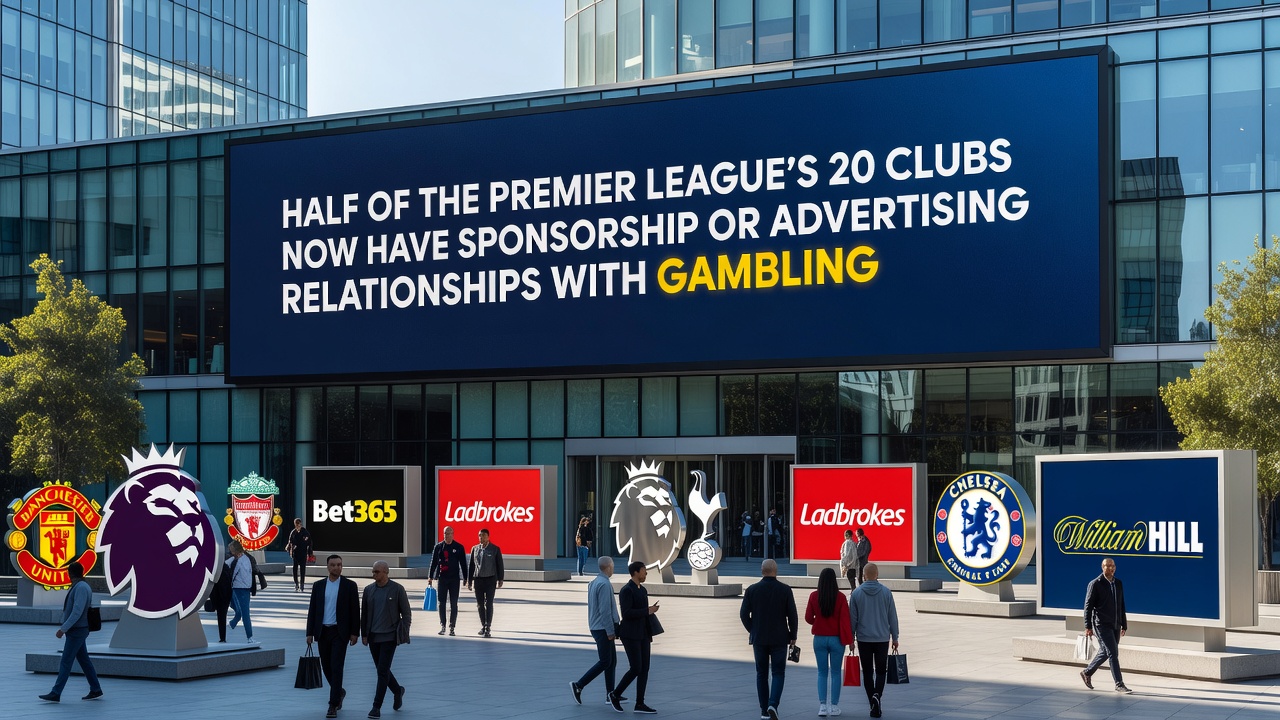
League executives have emphasised that the voluntary front-of-shirt ban addresses only the most visible form of exposure, while allowing clubs flexibility in other commercial categories. The distinction leaves room for the observed rise in unlicensed arrangements that sit outside both the Premier League code and the Gambling Commission’s direct oversight.
Revenue Exposure Under Review
Any future ban on unlicensed sponsorships would require clubs to identify replacement partners or restructure existing contracts. Observers note that the ten affected clubs currently rely on these deals for portions of their commercial income, and abrupt termination could trigger renegotiations or legal disputes over remaining contract terms. The government consultation gathered submissions on these financial implications, and the resulting policy paper, once published, is expected to outline transition periods or grandfathering provisions if restrictions are introduced.
Regulatory Landscape in September 2026
The eight-week consultation closed amid heightened attention to Britain’s unregulated betting market, with enforcement agencies reporting increased activity from offshore platforms that accept UK customers. The Premier League’s decision to limit front-of-shirt placements was framed as an internal governance measure rather than a direct response to the consultation, yet both developments converge on the same set of clubs that have expanded their commercial relationships over the summer months.
Conclusion
The current situation leaves ten Premier League clubs with active ties to unlicensed gambling operators at the moment the consultation record closes. The overlap between the league’s voluntary restrictions and the government’s policy review creates a defined period in which clubs, regulators, and operators will determine how sponsorship portfolios adjust if new rules take effect. Monitoring of advertising placements continues, and further updates are anticipated once the Department for Culture, Media and Sport issues its response to the consultation findings.